How ABA Therapy Improves Social Skills in Children with Autism
Social skills are the foundation of human interaction. For children with autism, building these skills can sometimes be challenging, which may affect communication, friendships, and overall development. Applied Behavior Analysis (ABA) Therapy is a proven method that helps children with autism improve their social abilities in a structured and supportive way.
In this blog, we’ll explore how ABA therapy works, why social skills are essential, and how parents in Ontario can support their children’s progress

Why Social Skills Are Important for Children with Autism
Social skills include making eye contact, sharing, taking turns, starting conversations, and understanding body language. These skills help children:
Communicate their needs effectively
Build friendships
Participate in school and community activities
Develop confidence and independence
Without guidance, children with autism may struggle to pick up these skills naturally. That’s where ABA therapy steps in.
How ABA Therapy Builds Social Skills
ABA therapy uses evidence-based strategies to teach children step by step. Here are some ways it helps improve social interactions:
1. Modeling and Role-Playing
Therapists demonstrate appropriate behaviors—like greeting someone—and children practice through role-play until it becomes natural.
2. Positive Reinforcement
Every successful attempt at a social skill is rewarded (praise, toys, or activities). This encourages children to repeat the behavior.
3. Breaking Down Skills into Small Steps
Complex interactions, such as joining a group activity, are broken into manageable steps. Children learn one step at a time until the entire skill is mastered.
4. Natural Environment Training (NET)
Skills are practiced in real-life settings—classrooms, playgrounds, or at home—so children learn how to apply them outside therapy sessions.
5. Peer Interaction
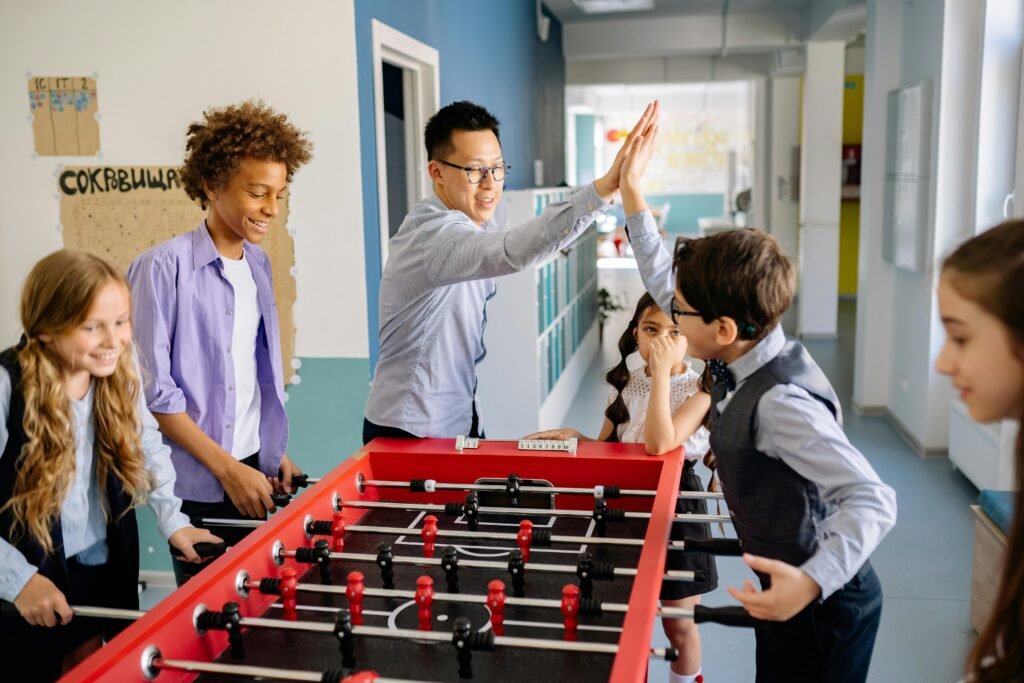
Group sessions and play-based activities allow children to practice with peers, strengthening their ability to form friendships.
Examples of Social Skills Taught in ABA Therapy
Greeting others with “hello” or “goodbye”
Asking questions during conversations
Sharing toys or materials during play
Understanding facial expressions and emotions
Taking turns in games and group activities
Initiating and maintaining conversations
Benefits of Social Skill Development Through ABA Therapy
Better communication with family and peers
Improved participation in school and daycare
Reduced frustration and behavioral challenges
Greater self-confidence in social settings
Long-term independence and inclusion
How Parents Can Support Social Skills at Home
Practice daily: Encourage greetings, turn-taking, and sharing at home.
Use visuals: Social stories and visual schedules help children understand expectations.
Celebrate progress: Praise and reward every effort, no matter how small.
Work with therapists: Stay consistent with ABA strategies recommended by your therapy team.
Ontario ABA Therapy Services for Social Skills Development
At Ontario ABA Therapy, we provide:
In-home ABA sessions for personalized care
Virtual ABA therapy for flexible learning
Daycare and school support to help children in group environments
Parent coaching so families can continue progress at home
Our team specializes in teaching children the social skills they need to connect, communicate, and thrive.
Conclusion
ABA therapy is one of the most effective ways to help children with autism improve their social skills. By using structured teaching, positive reinforcement, and real-world practice, children gain the confidence and ability to build meaningful relationships.
At Ontario ABA Therapy, we recognize that every child is unique and requires a personalized approach. Our dedicated therapists work closely with families to set achievable goals, track progress, and celebrate every milestone. Whether through in-home sessions, virtual support, or daycare programs, we are committed to helping children thrive socially, emotionally, and academically in every stage of their development, creating brighter futures every single day
Contact us today to learn how our programs can make a difference in your child’s life.