When Priya’s son, Aarav, turned four, birthday parties had become the hardest days of the year. While other children chased each other across the yard, Aarav stood at the edge, watching, unsure how to step in. He wanted to play. He simply didn’t know how to start.
If that scene feels familiar, you are not alone. For many children on the autism spectrum, social skills that seem to come naturally to others, like making eye contact, taking turns, or asking a friend to play, need to be taught with patience and structure. This is exactly where Applied Behavior Analysis, or ABA, quietly changes lives.
What “Social Skills” Really Means in ABA
We often imagine social skills as one big ability. In reality, they are dozens of small, learnable steps stacked together. Greeting someone, waiting your turn, reading a facial expression, sharing a toy, recovering after being told “no”, each of these is a skill on its own.
ABA breaks these large, overwhelming goals into small, teachable pieces. Instead of expecting a child to “be more social,” a therapist might first teach them to respond to their name, then to look toward a peer, then to hand over a toy. Each success becomes the foundation for the next. Delivered by Board Certified Behavior Analysts (BCBAs) and trained therapists, this method has decades of peer-reviewed research behind it, which is why it remains one of the most widely recommended approaches for autism support.
How ABA Teaches Social Skills, Step by Step
Aarav’s therapist didn’t start with a birthday party. She started with a single, achievable moment.
- Building on strengths first. Every plan begins with an assessment of what your child already does well. Aarav loved trains, so trains became the bridge. Sharing a train with a therapist was his first taste of turn-taking.
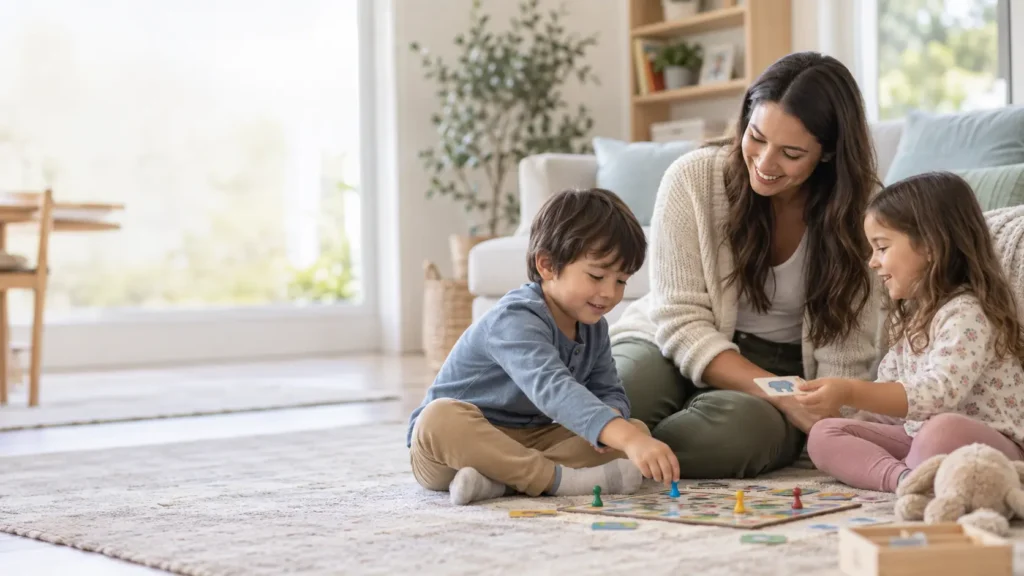
- Modeling and practice. Therapists show the skill, then guide the child through it. “My turn, your turn,” repeated gently, until the rhythm feels safe rather than confusing.
- Positive reinforcement. When Aarav handed over the train, he got praise, a high-five, and another turn. Reinforcement is not bribery; it is a way of helping the brain connect a social action with a good feeling, so the child chooses to do it again.
- Practicing in real life. Skills learned at a table mean little if they stay there. Good ABA moves quickly into natural settings, such as playgrounds, daycare rooms, and living rooms, so the learning sticks. Families across the province, from Toronto to those seeking ABA therapy in Mississauga, often see the biggest gains when practice happens where their child actually lives and plays.
- Involving parents. You are the most consistent teacher your child will ever have. Structured parent coaching helps you carry these strategies into everyday moments, so progress doesn’t pause when the session ends.
The Turning Point
By his fifth birthday, Aarav did something small that felt enormous to Priya. He walked up to another child, held out a toy, and said, “Play?” One word. One gesture. Months of patient, structured work behind it.
That is what teaching social skills through ABA looks like, not a dramatic overnight change, but a steady stack of small wins that add up to real connection.
Why Trust ABA for Social Skills
It’s fair to ask whether an approach is truly worth your time and hope. ABA is not a trend. It is grounded in more than fifty years of research, guided by certified professionals, and individualized for every child. Reputable providers of ABA therapy in Canada build measurable goals, track progress with data, and adjust the plan as your child grows. That transparency, being able to see what is working and why, is part of what makes the approach trustworthy for families.
The goal is never to make a child “less autistic.” It is to give them tools to connect, communicate, and take part in the moments that matter, on their own terms.
Frequently Asked Questions
At what age can ABA start teaching social skills? ABA can begin as early as toddlerhood. Early intervention tends to bring strong results, but children of many ages, including school-age kids and teens, benefit from social skills teaching.
How long before we see progress? Every child is different. Some families notice small changes within weeks, while more complex skills take months of consistent practice. Progress is tracked with data, so you’re never guessing.
Can I teach these skills at home too? Absolutely, and you should. Parent involvement is one of the strongest predictors of lasting progress. A good provider will coach you on simple strategies to use during everyday routines.
Does ABA work for non-verbal children? Yes. Social skills include far more than speech, such as gestures, eye contact, sharing, and using communication devices. ABA meets each child where they are.
A Final Word for Parents
Every child deserves the chance to make a friend, join a game, and feel like they belong. Teaching social skills through ABA is one patient step at a time toward that belonging. If you’re wondering where to begin, start small, stay consistent, and reach out for expert support. That first “Play?” may be closer than you think.